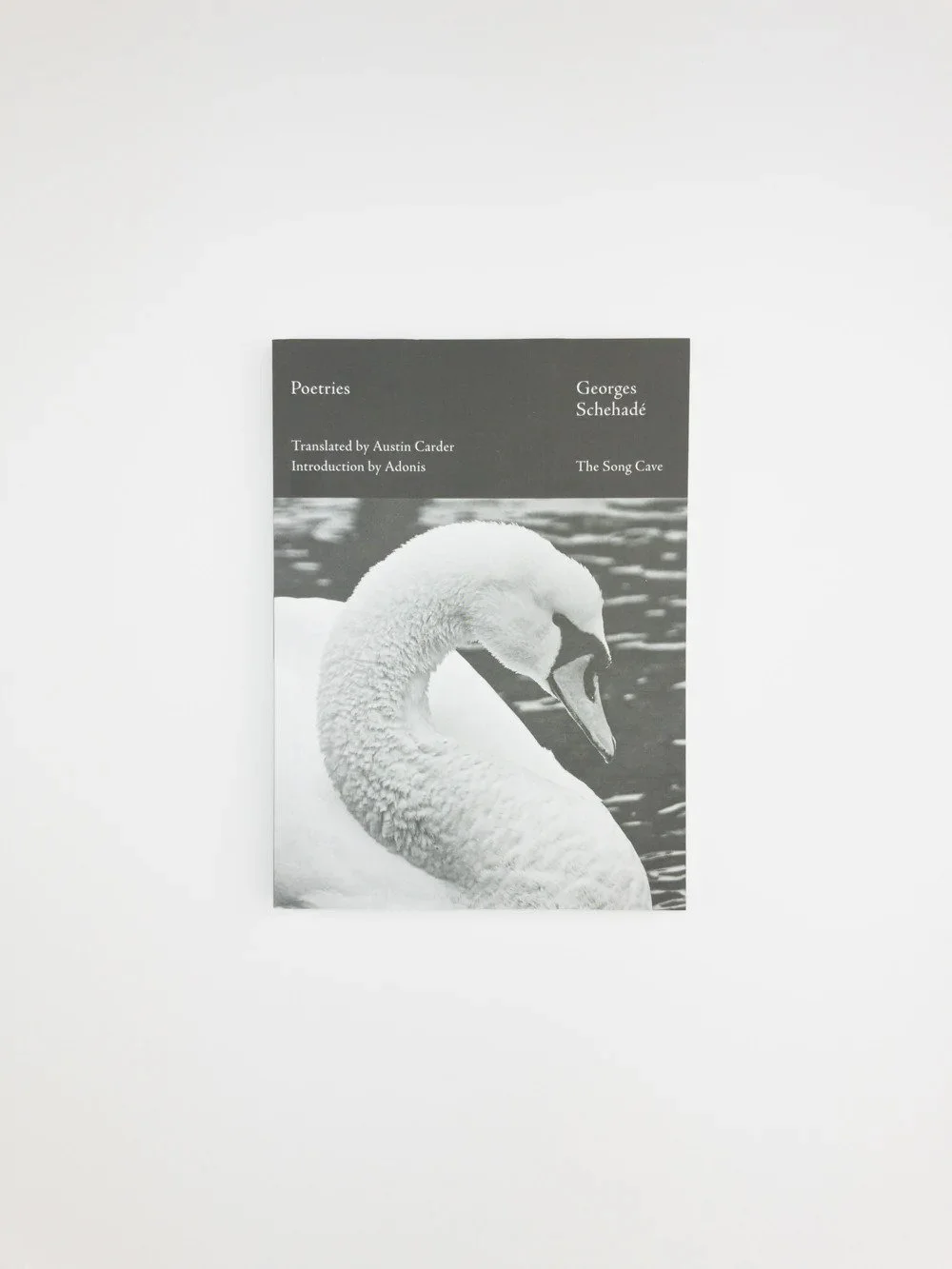
Poetries by Georges Schehadé
Translated from the French by Austin Carder
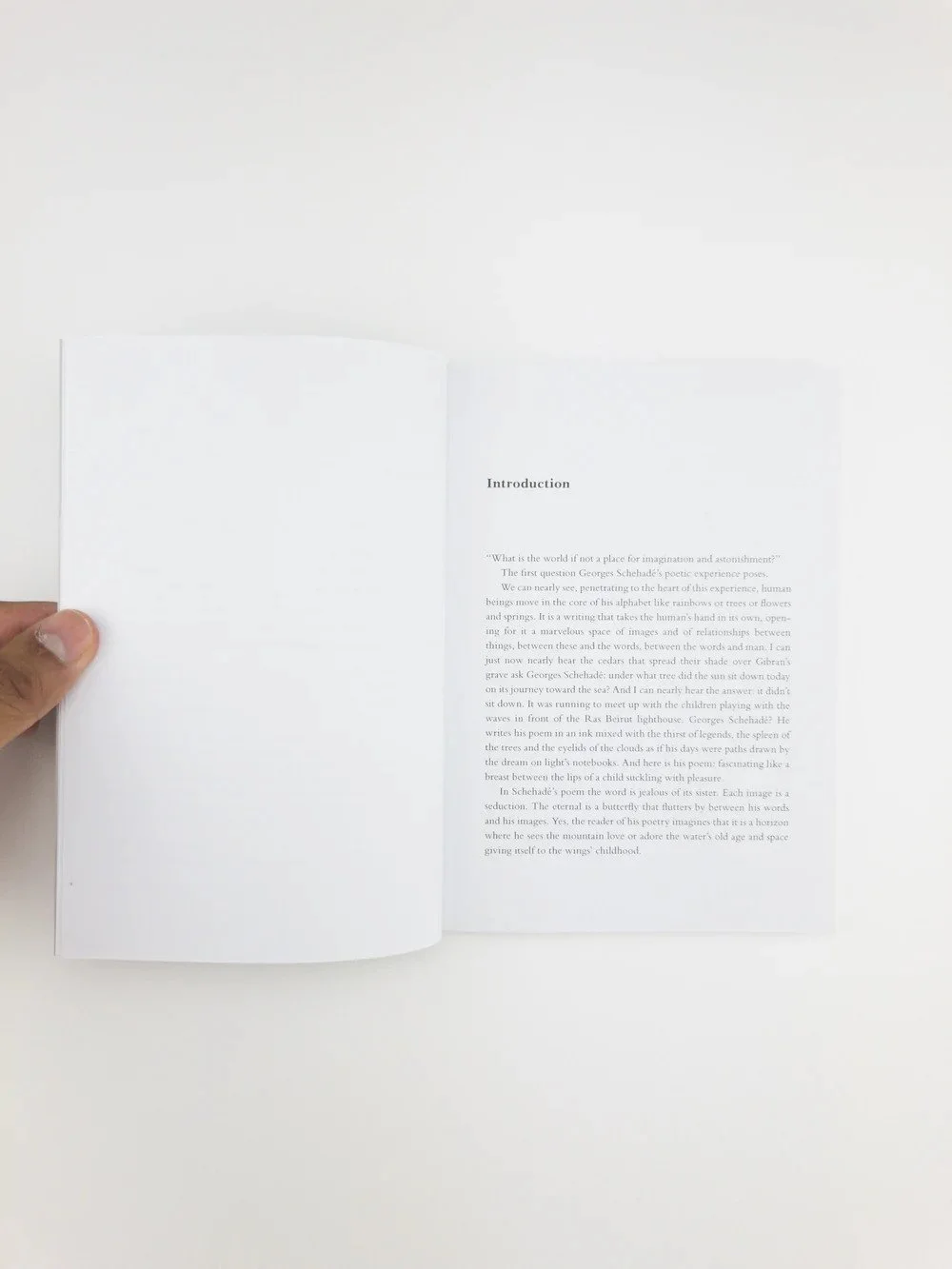
Introduction by Adonis
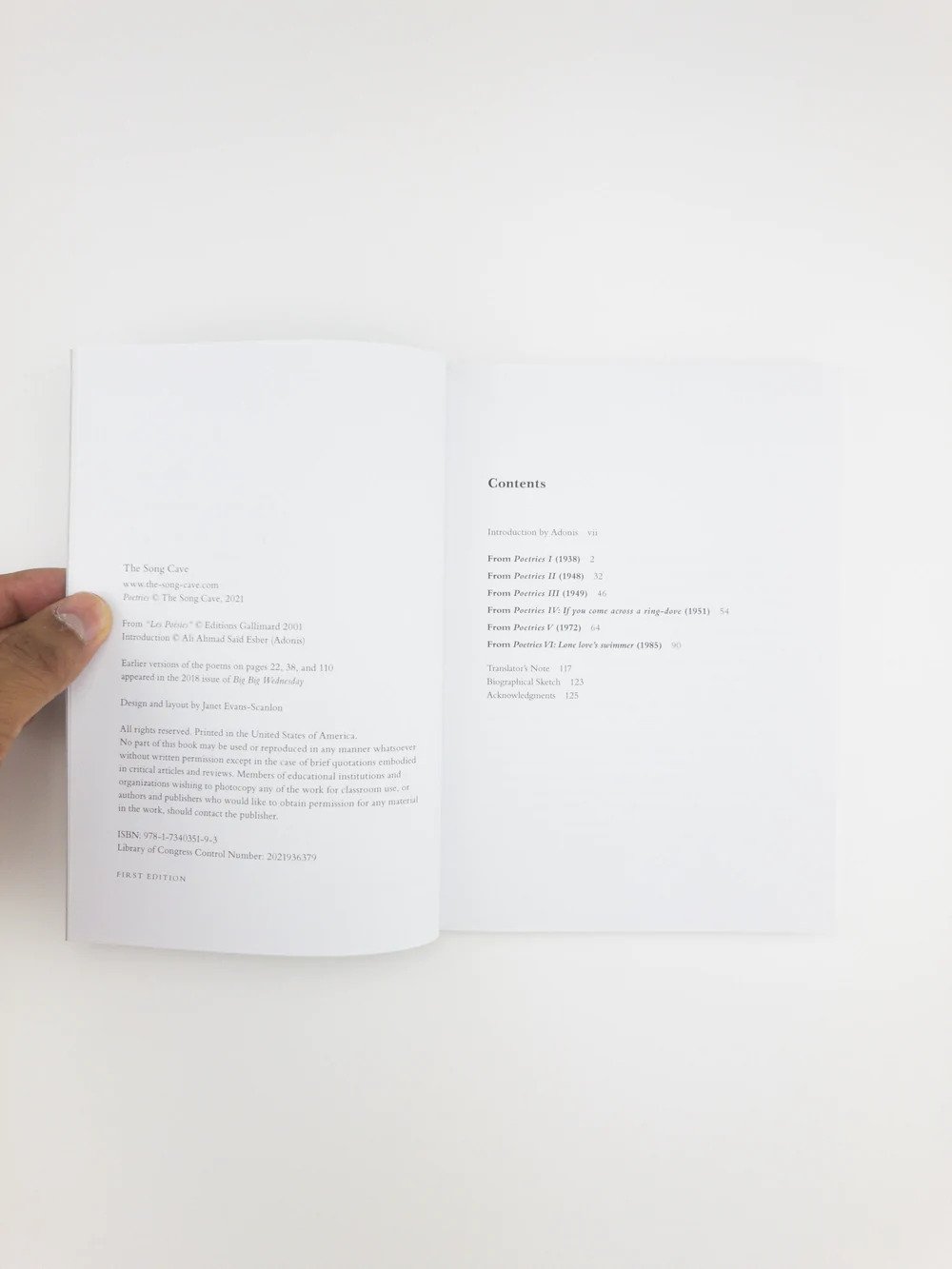
The Song Cave, 2021
Read my Translator’s Note here.
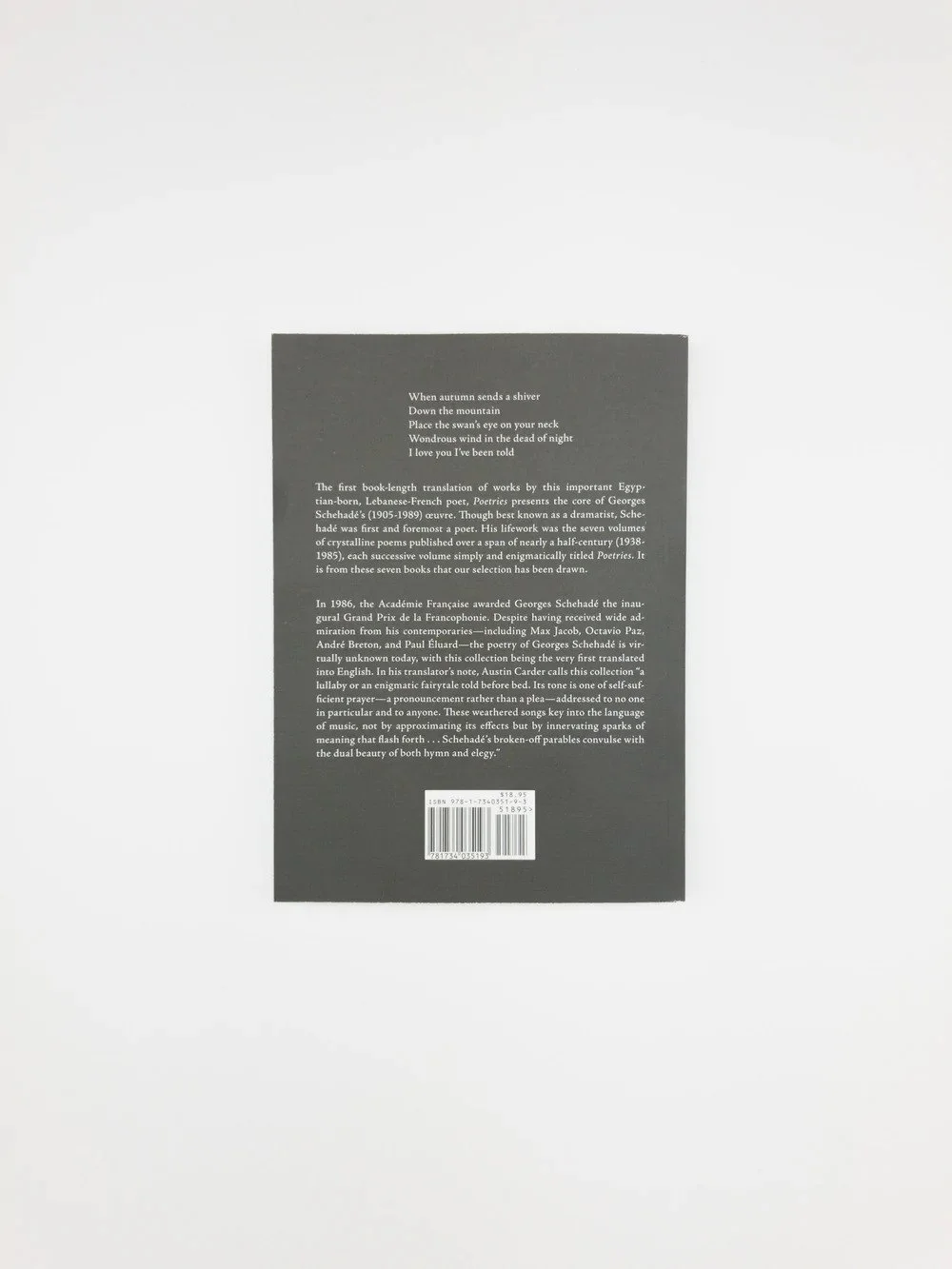
When autumn sends a shiver
Down the mountain
Place the swan’s eye on your neck
Wondrous wind in the dead of night
I love you I’ve been told
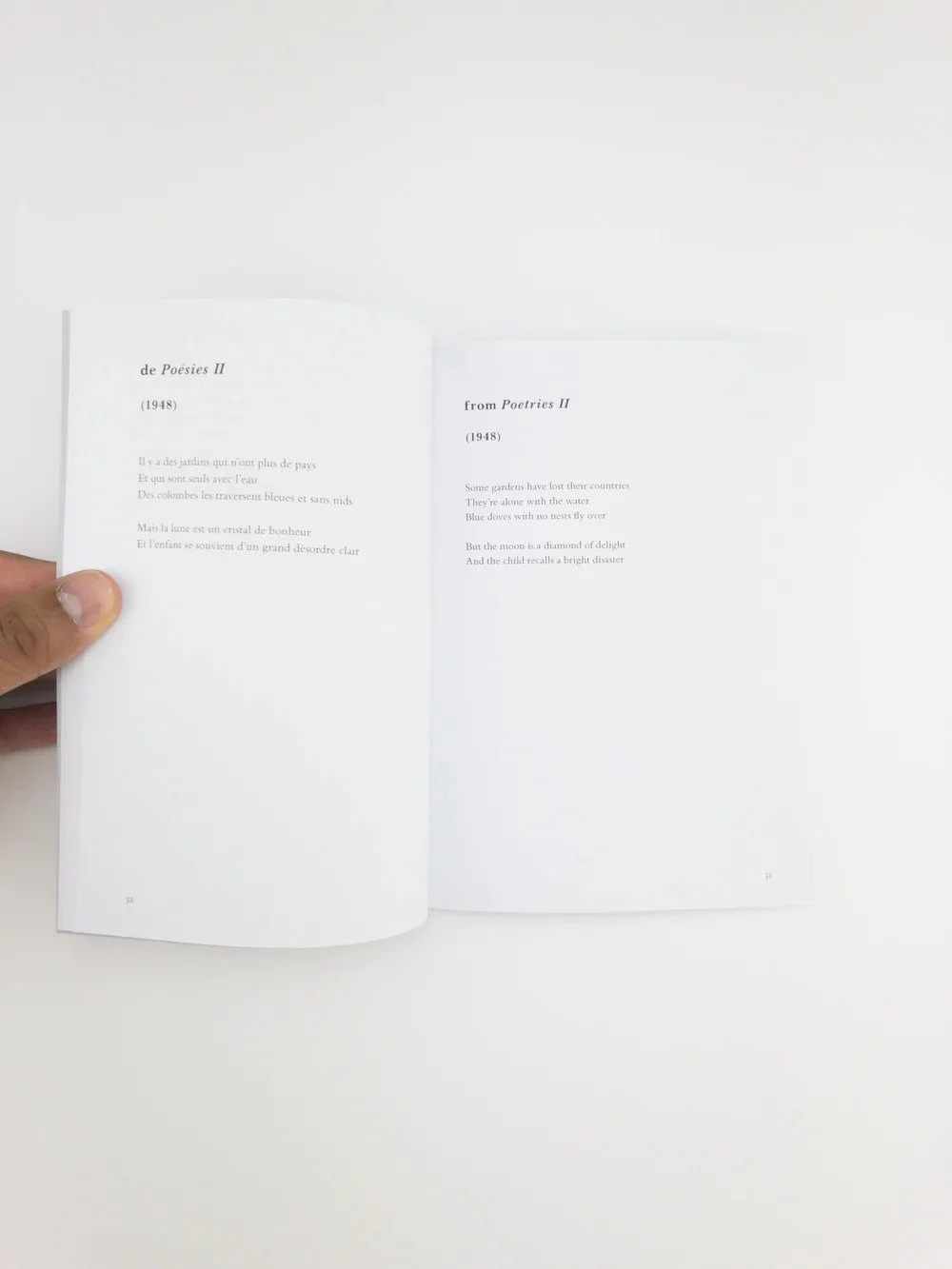
The first book-length translation of works by this important Egyptian-born, Lebanese-French poet, Poetries presents the core of Georges Schehadé’s (1905-1989) œuvre.
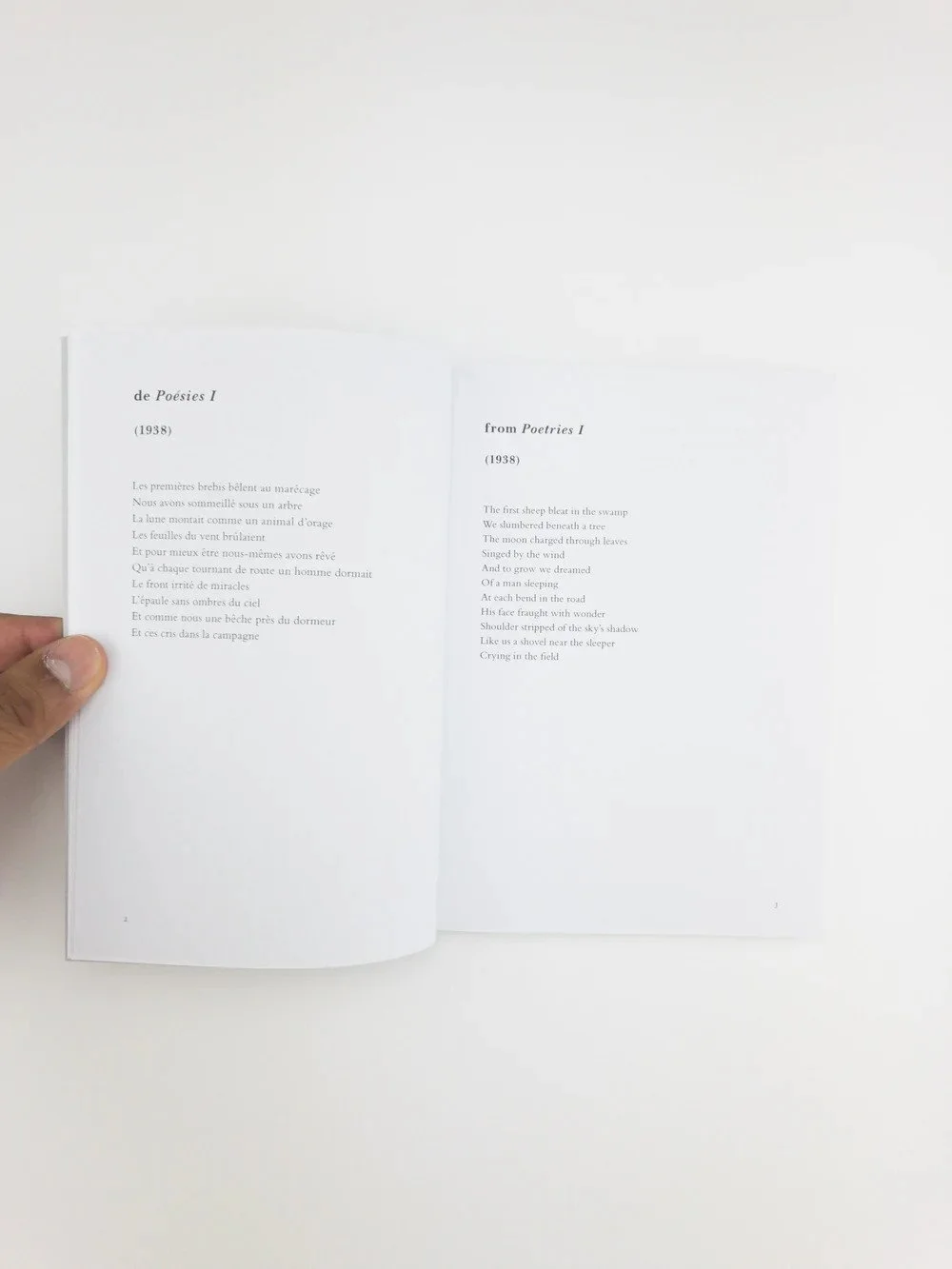
Though best known as a dramatist, Schehadé was first and foremost a poet. His lifework was the seven volumes of crystalline poems published over a span of nearly a half-century (1938-1985), each successive volume simply and enigmatically titled Poetries. It is from these seven books that our selection has been drawn.
In 1986, the Académie Française awarded Georges Schehadé the inaugural Grand Prix de la Francophonie. Despite having received wide admiration from his contemporaries—including Max Jacob, Octavio Paz, André Breton, and Paul Éluard—the poetry of Georges Schehadé is virtually unknown today, with this collection being the very first translated into English.
In his translator’s note, Austin Carder calls this collection “a lullaby or an enigmatic fairy tale told before bed. Its tone is one of self-sufficient prayer—a pronouncement rather than a plea—addressed to no one in particular and to anyone. These weathered songs key into the language of music, not by approximating its effects but by innervating sparks of meaning that flash forth…Schehadé’s broken-off parables convulse with the dual beauty of both hymn and elegy.”
Floating up as if from the weave of the page itself, these perfectly pitched versions of Georges Schehadé’s Les Poésies convey a mysterious sense of the inevitable. One couldn’t ask more of a translation, and with the gift of this one Austin Carder gives us (and English) a haunting new poet of magical clarity and uncanny quiet. This is a beautiful book.
Peter Cole
Austin Carder’s lucid translations of Schehadé’s poems convey the melancholy of the original in an English that gives rise to its own compelling melody. A good translator is a good listener, and Carder listens closely to the French original before he breathes his translations into life: “Listen through the branches / for the golden sound of a dying tree.” There is a quiet beauty to these translations, and a stark simplicity; Carder knows that staying true to the spirit of the original text is the best way to let a translation sing with its own convincing, and equally original, voice.
Charlotte Mandell
As a key member of the Surrealists, Schehadé helped define 20th century French avant-garde poetry—in part, because his work overflows the Surrealist ethos, entering territory that is both more vulnerable and more eerie. Carder perfectly captures his unique flavor; as he says in his excellent translator’s note, “strict faithfulness would have meant a greater betrayal.” His translations take the risk of attending to the spirit as well as to the letter, and the result is a text that thrives in its new language, radiating the brilliance of the freshly minted.
Cole Swensen
Austin Carder’s metabolic recasting of the hitherto barely noticed poetry of Georges Schehadé reveals his integral devotion to the vitality of his craft. These are wondrous, sublime, and delicate events of a poetic passing-through.
Irakli Qolbaia
Reviews
Carder’s crisp English versions convey the French poems’ restlessness, and do so precisely by departing from them in surprising ways: “[The Poetries] are no longer themselves; they may continue becoming more themselves for this reason.”
Samuel E. Martin
Hopscotch Translation
In these miniature epics [Schehadé] composed serial poems of the disjointed self, headlights roaming the sky which gesture at totality while also illuminating the gap between earth and cosmos.
Harris Wheless
The Oxonian Review
[Carder] translates, not the words, but the poem as he hears it, which means that he is willing to be, as some might think, ever so unfaithful to the words (and their lineation), but only in order to be faithful to the poem—understanding that the poetry of English hears things a little differently from the poetry of French, for all their mutual interchange.
Barry Schwabsky
Tourniquet Review
…Poetries by the French-Lebanese playwright and poet Georges Schehadé (translated beautifully by Austin Carder), brings American readers a first glimpse of a too-little-known major poet’s half-century experiment in poetry.
Dan Beachy-Quick
Colorado Review
In his introduction, poet Adonis writes, “We do not see streets in Georges Schehadé’s poetry, nor factories. We see the sap of cities... He scrutinizes humankind with his piercing gaze, but he writes divinity. And each thing in his language is poetry.” Schehadé’s poems are often fragmentary but with a strong sense of atmosphere.